
"countries and regions"
10000 article(s) found

Nicaragua Coffee Matagalpa Region Lemon Tree Estate Introduction
Coffee is Nicaragua's main export product. Nicaragua's total coffee production for the 1998/99 coffee year could be 12 per cent lower than in 1997/98 due to the poor harvest in the Pacific region, according to the president of the Nicaraguan Coffee Farmers Federation. Nicaragua harvested 1 422 000 bags (46kg/bag) of coffee in the 1997/98 coffee year, which is 14 years coffee production has been 1

Introduction of Colombian Coffee Bean Variety with strong Flavor and Regional treatment Manor
Colombia has four treasures: flowers, gold, emeralds and coffee. You can see the importance of coffee Colombia. And there may be very few coffee in the world named after a country, such as Nestle Coffee and Blue Mountain Coffee are not named after a country. Colombia is the first country to use the name of the country as a brand of coffee. Colombian coffee is based on its quality, taste and high quality.

Introduction of Grinding scale for Regional treatment of Pacamara Coffee Bean varieties
Introduction to the Grinding scale of the Regional treatment method of Pacamara Coffee Bean El Salvador is one of the small countries in Central America with a very dense population. People here love coffee. The coffee in El Salvador tastes well balanced. Salvadoran coffee exports account for 40% of the country's exports. The best quality coffee is exported from January to March each year, and 35% of the extra hard beans are exported to Germany.
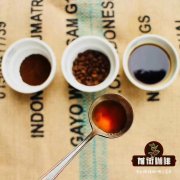
The style characteristics of Costa Rican Coffee
For more information on coffee beans, please follow the Coffee Workshop (Wechat official account cafe_style). In the past, Costa Rica has successfully sold its coffee according to the name of its producing area. However, tastes vary from region to region, so it is well worth exploring each region to see what kind of coffee beans they can produce. CENTRAL VALLEY

Characteristics of Salvadoran Coffee Beans Flavor Description Taste Treatment Region of Origin Grinding Scale
El Salvador coffee beans characteristics Flavor Description Taste processing French region grinding scale El Salvador, Cusca Bappa region is the best coffee beans, it is slightly light weight, aromatic taste, pure, slightly sour. Like Guatemala and Costa Rica, coffee in El Salvador is graded according to altitude, with the higher the altitude, the better the coffee. The best brand is the horse.

Coffee leaf rust has caused serious losses in Central American coffee producing countries.
Coffee leaf rust, which begins to spread among coffee trees as small yellow spots, will soon turn coffee leaves into a pile of dead leaves. In five years, the plague among coffee trees reduced coffee production in Central America to an all-time low, affecting not only the price of coffee, but also the labor balance in the region, forcing many local citizens to emigrate illegally to the United States. Since 2

Dominica Santo Domingo Coffee region Flavor introduction Fine Coffee
The Dominican Republic has also experienced a history of unrest and poverty, and now the country has implemented democratic elections and entered a period of stable development, but it has not yet formally established diplomatic relations with China, but has maintained so-called diplomatic relations with Taiwan. It seems that this has nothing to do with coffee, but in fact, it still has an impact. The exchanges between the two countries that have not established diplomatic relations are subject to many restrictions in all aspects, and of course they will.

Description of Flavor of Coffee Bean producing countries in North America introduction of Grinding scale Manor in producing area
North American coffee bean producing countries describe the taste of coffee varieties in the region grinding scale manor introduction coffee in Central America began in the 18th century, this important economic product originated in Costa Rica, about 1840. Since Central America became independent from Spain in 1821, there has been a lot of war. Because Costa Rica was far away from Guatemala City, the capital of the Spanish colony at that time, it was not affected.

Regional treatment of El Salvador Mercedes coffee beans how to drink flavor varieties
How do Salvadoran Mercedes coffee beans drink flavor regional treatment Salvadoran coffee ranks alongside Mexico and Guatemala as producers of Asa and Merdo, and is fighting for the top two places in China and the United States with other countries. The highlands of origin are large coffee beans of all sizes, which are fragrant and mild in taste. Like Guatemala and Costa Rica, El Salvador

Introduction to the regional treatment method for describing the characteristics, taste and flavor of Nicaraguan coffee beans
Nicaraguan coffee beans characteristic taste flavor description variety production area treatment method introduction when tasting Nicaraguan coffee, it is best to drink cold water first, so that you can better feel its mellow taste. Drink coffee while it is hot, because the tannins in Nicaraguan coffee are easy to change during cooling, and the taste becomes sour, which will affect the flavor of the coffee. You can add more.
Boutique Coffee El Salvador Coffee Region Izalco, Sonsonate
Unique, mild coffee. El Salvador is one of the small countries in Central America and has a very dense population. Its coffee flavor is characterized by excellent balance. Today, this coffee accounts for 40% of the country's exports. The best quality coffee comes out in January to March after 35% of extra-hard beans are exported to Germany. In the early 1990s, guerrilla warfare devastated the country.
Boutique Coffee El Salvador Coffee Region Izalco, Sonsonate
Unique, mild coffee. El Salvador is one of the small countries in Central America and has a very dense population. Its coffee flavor is characterized by excellent balance. Today, this coffee accounts for 40% of the country's exports. The best quality coffee comes out in January to March after 35% of extra-hard beans are exported to Germany. In the early 1990s, guerrilla warfare devastated the country.

Boutique Coffee El Salvador Coffee Region Izalco, Sonsonate
Unique, mild coffee. El Salvador is one of the small countries in Central America and has a very dense population. Its coffee flavor is characterized by excellent balance. Today, this coffee accounts for 40% of the country's exports. The best quality coffee comes out in January to March after 35% of extra-hard beans are exported to Germany. In the early 1990s, guerrilla warfare devastated the country.

The harvest time of coffee is different in different countries and regions.
The collection time is different in different countries and regions. The harvest process requires a lot of manpower, especially high-quality coffee, which can only pick fully ripe brown coffee peaches. Since all coffee peaches do not ripen at the same time, you need to go back to the same tree many times to pick them. Coffee beans come from a ripe peach called cherrie.

Introduction of two major coffee producing areas-the largest coffee producing country in the world
Coffee growing area: multi-regional (Latin America, Africa, Asia / Pacific) processing method: washing flavor: floral flavor, herbal flavor, lemon flavor, gallon flavor acidity: high mellow: medium matching taste: floral flavor, citrus, gallon flower breeze is the name of a coffee bean, just like Starbucks' Florna, Youken, etc. At Starbucks, it's used to do

Typical aroma and flavor descriptions of traditional Rwandan and Burundian coffee cups
Rwanda and Burundi are small landlocked countries located in the heart of the Great Lakes region of Africa. Although their specific histories are different, they have something in common in terms of coffee origin and society. Both countries are small countries with problems in history, but the boutique coffee they produce is very good, and it is very interesting that both of them have high average growth altitude and excellent coffee soil.

Taste sour, mellow taste of Nicaragua Joy Manor coffee flavor taste characteristics of the region Variety
In many countries coffee production is severely affected for political reasons. The coffee industry in Nicaragua is no exception. The revolution of 1979 forced coffee growers to flee to Miami. A period of uncertainty ensued as the government considered whether to reallocate land (including many plantations), resulting in coffee shortages and declining yields from the early 1970s.

Introduction of Cuban Crystal Coffee in the American region south of the United States
The people of South America have waged a long and heroic struggle for freedom and liberation. In the second half of the 18th century, the system maintained by the sovereign state increasingly became the biggest obstacle to social development, and the development of this principal contradiction pushed the South American people to embark on the road of the War of Independence. In 1810, armed uprisings spread throughout South America. After more than a decade of bloody struggle, Xi was finally overthrown.

Unique Nicaragua coffee region Manor Boutique Coffee Flavor Taste Aroma Description
Coffee is Nicaragua's main export product. Nicaragua's total coffee production for the 1998/99 coffee year could be 12 per cent lower than in 1997/98 due to the poor harvest in the Pacific region, according to the president of the Nicaraguan Coffee Farmers Federation. Nicaragua harvested 1 422 000 bags (46kg/bag) of coffee in the 1997/98 coffee year, which is 14 years coffee production has been 1

Flavor description of Costa Rican yellow honey coffee beans introduction to the regional treatment method of manor production
Costa Rican yellow honey coffee beans flavor description taste manor production area treatment method to strengthen the export of high-quality coffee to Europe, the United States, Japan and other countries. European and American countries have high living standards, high consumption levels and high requirements for the quality of coffee. A cup of high-quality coffee can sell for $3.25 in Europe and the United States. My brother launched a strong publicity campaign for the European, American and Japanese markets. This offensive